What Makes for Your Perfect Day?
Curt Skene’s In2Win! Career Coaching Supplement.
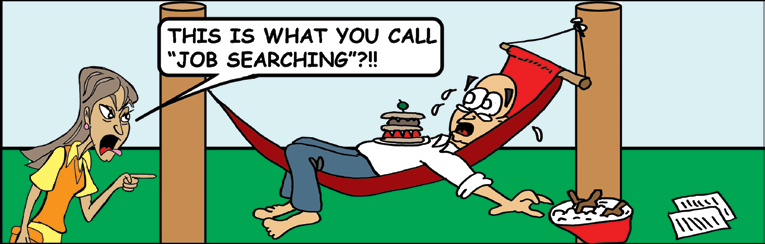
The biggest mistake executives make is to head into career transition with no thought or plan. Much like your working days you need to plan your work and work your plan. While every executive is different and many will tell you what their perfect day might look like, it is important that you create your own definition and learn to live by it.
Whatever your definition is, make sure you know your peak performance periods so you can schedule your most challenging tasks in that timeframe. Start your day early dressed in business attire. After an hour of doing follow-up activities you might schedule a morning coffee meeting to energize yourself to get out the door.
Be mindful of becoming a slave to your computer or any other meaningless task. Few have landed their next successful career opportunity while sitting behind their home-office desk. Make it a habit to schedule your office admin time either before 9:00 am or after 6:00 pm.
This way most of your day can consist of networking (face-to-face, telephone or group meetings). You may also want to consider time for regular exercise to release stress as well as time to develop your expertise (technical, professional and soft skills). Don’t hesitate to mix things up from time to time because variety really can be the spice in your life.
A productive transition needs balance: focused search activity, continued learning and enough enjoyment to protect your energy.
Why I Wrote This Page
Because when you lose your job, you often lose your structure and your sense of purpose along with it. At work you had discipline built in: a schedule, a routine, expectations placed on you. In transition all of that disappears overnight, and this is exactly the moment you need to manage your efforts the most, not the moment to let them slide.
There’s a specific reason unstructured time does so much damage: decision fatigue. At work, most of your day was already decided for you, a meeting, a deadline, a boss’s expectations. In transition, every hour becomes a decision you have to make fresh, and that adds up. By the time you’d normally be doing your highest-value work, calls, applications, networking, you’ve already burned your best decision-making energy on whether to check email or make coffee first. A schedule isn’t about rigidity. It’s about removing hundreds of small decisions so your energy goes into execution instead of deliberation.
I’m a believer in balancing three things: work hard, play hard, and educate. Not because it sounds well-rounded, but because each piece protects the other two. Work without play burns you out. Play without work is just avoidance with better PR. And without deliberately learning something new, you stop getting sharper while your competition does.
Action Steps
- Decide tomorrow’s schedule tonight, not the morning of. Making the decision once, in advance, means you start the day executing instead of deciding.
- Protect your single best energy window for the task you’re most tempted to avoid, not for email. Whatever requires courage, a hard call, a follow-up you’re dreading, goes there.
- Treat “play” as a scheduled non-negotiable, not a reward you’ll get to eventually. If it’s not on the calendar, lower-value busywork eats it every time.
In2Win! Afterthought
Curt’s current observations and updated guidance will be added here.
Suggested Reading Links
The Learning Library contains hundreds of books on a variety of business and career topics. We want to make sure you don’t miss these ones.
What does this page mean for your search?
Share an idea, ask a question or learn from other In2Win! members. Posting requires a Quickstart, Premium or VIP login.
Be the first to join this discussion
Join the Discussion →