Do You Think Like an Employer?
Curt Skene’s In2Win! Career Coaching Supplement.
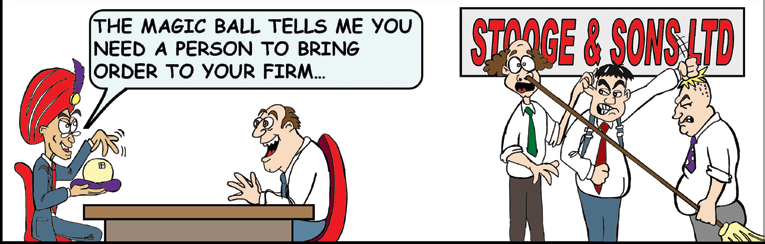
Anticipation is one of the best tools for creating powerful connections with prospective employers. The more you know about their business and demonstrate you can think like them, the stronger that connection will be. Constantly ask yourself, what potential challenges might this company face and what would you do if you were already in the role?
Bring in supporting documentation (e.g. mind maps, best practices, articles, etc.) that will demonstrate that you are already thinking about their business and what you may do.
Always introduce these items early in the meeting so that the employer knows you did something special to prepare for this meeting. You can say something like “While I don’t pretend to know your business fully I thought it may be helpful to you if I demonstrated how I approach certain challenges and what I might do.” Anticipate concerns that the employer may have with hiring you so you can address and quickly move them out of the way. One of the most powerful things you can say when an employer has an objection is “I thought about that as well and here is what I came up with…” This immediately neutralizes their concern and puts you on the same page with them.
There are many times when just demonstrating awareness and empathy to a potential issue (e.g. not enough industry experience, poor work record, etc.) will appease the employer enough to keep them talking to you.
Help employers picture you already solving their problems and contributing inside the role.
Why I Wrote This Page
Because most candidates only think from their own perspective, what they want to say about themselves, rather than genuinely modeling the problems on the other side of the table.
Real perspective-taking is cognitively effortful. It requires setting aside your own narrative and asking, specifically, what this employer is actually worried about right now, which is exactly why so few candidates do it well. That effort is precisely what makes it valuable. When you walk in already thinking about their problems instead of your own pitch, you stand out simply by being one of the only people in the process who bothered.
This isn’t about pretending to know their business better than they do. It’s about proving, before you’re hired, that you already think the way someone in the role would.
Action Steps
- Before any interview, write down three specific challenges you believe this employer is facing right now, based on real research, not guesses.
- Bring a simple supporting document, a one-page framework or observation, that shows you’ve already started thinking about their problem.
- Practice the phrase “I thought about that too, and here’s what I came up with” for at least one likely objection before you walk in.
In2Win! Afterthought
Curt’s current observations and updated guidance will be added here.
Suggested Reading Links
The Learning Library contains hundreds of books on a variety of business and career topics. We want to make sure you don’t miss these ones.
What does this page mean for your search?
Share an idea, ask a question or learn from other In2Win! members. Posting requires a Quickstart, Premium or VIP login.
Be the first to join this discussion
Join the Discussion →