Are You Speaking to Your Results?
Curt Skene’s In2Win! Career Coaching Supplement.
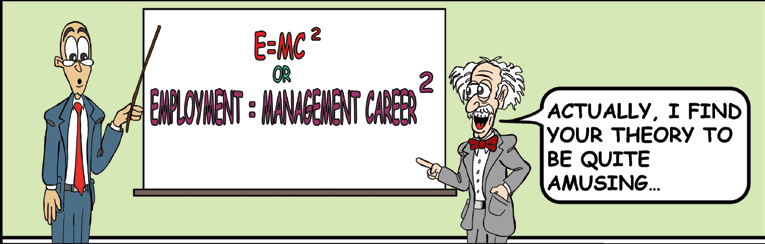
Those executives who land quickly know it’s not what you did that matters but the results of your efforts so always focus on return on investment (ROI). Whether you are selling, leading a team, re-purposing a brand or re-inventing a business process it means nothing if the work doesn’t lead to a tangible positive result (i.e. faster, cheaper, more efficient or more profitable). If you don’t have “real” numbers that you can share, then use something that offers a fair representation of your success. It’s also wise to give context, as in a before and after scenario that underlines the challenges you faced and the unique success strategy you applied.
Remember you are dealing with the employer’s perspective of the market which may be much different than yours. Offering an industry comparison such as, “In a declining market or an industry that typically grows X% we grew XX%,” will often tell them more about your success than simply stating, “We grew XX%.” If you make your actions sound too simple your examples won’t be exciting, respected or appreciated.
The more dramatic you can make it, the more perceived value you appear to have added. Ensure your results are clear and deliver them early in your discussions because results are the hooks that help you stand out. You should never assume others will know how difficult your achievements were so find a way to underscore your efforts without sounding too egotistical.
Employers were not present for your accomplishments. Give them enough evidence to understand the difficulty and value.
Why I Wrote This Page
Because you know intimately how hard your own accomplishments were to achieve, but the person listening has zero access to that context. Understating the difficulty because it feels obvious to you is one of the most common, invisible ways professionals undersell themselves.
This is a version of the curse of knowledge: once you know something well, it’s genuinely hard to imagine what it looks like from the outside. What feels like an ordinary Tuesday to you, navigating a difficult stakeholder, turning around a failing initiative, reads as unremarkable to someone who wasn’t there, unless you supply the difficulty explicitly. Modesty about the hard parts isn’t humility. It’s a communication gap.
The employer wasn’t in the room when you did the work. If you don’t supply the context, no one else will.
Action Steps
- For your top three results, explicitly name what made them hard, not just what the outcome was. Difficulty is part of the story, not a detail to skip.
- Add an industry comparison where you can, “in a declining market” or “against a typical growth rate of X.” Context turns a number into an achievement.
- Ask someone unfamiliar with your work to read your results cold. If they’re not impressed, you’ve left out the difficulty, not overstated the outcome.
In2Win! Afterthought
Curt’s current observations and updated guidance will be added here.
Suggested Reading Links
The Learning Library contains hundreds of books on a variety of business and career topics. We want to make sure you don’t miss these ones.
What does this page mean for your search?
Share an idea, ask a question or learn from other In2Win! members. Posting requires a Quickstart, Premium or VIP login.
Be the first to join this discussion
Join the Discussion →